Tourism is moving beyond being an industry of travel and leisure. By 2030, it is expected to play an even greater role in economic growth, employment, cultural exchange, community development, and the transition towards a more sustainable economy.
The scale is already significant. In 2025, Travel & Tourism contributed US$11.6 trillion to the global economy—9.8% of global GDP—and supported 366 million jobs worldwide. WTTC expects the sector to support almost 89 million additional jobs over the next decade.
The opportunity, however, is not simply to grow tourism. It is to grow better tourism.
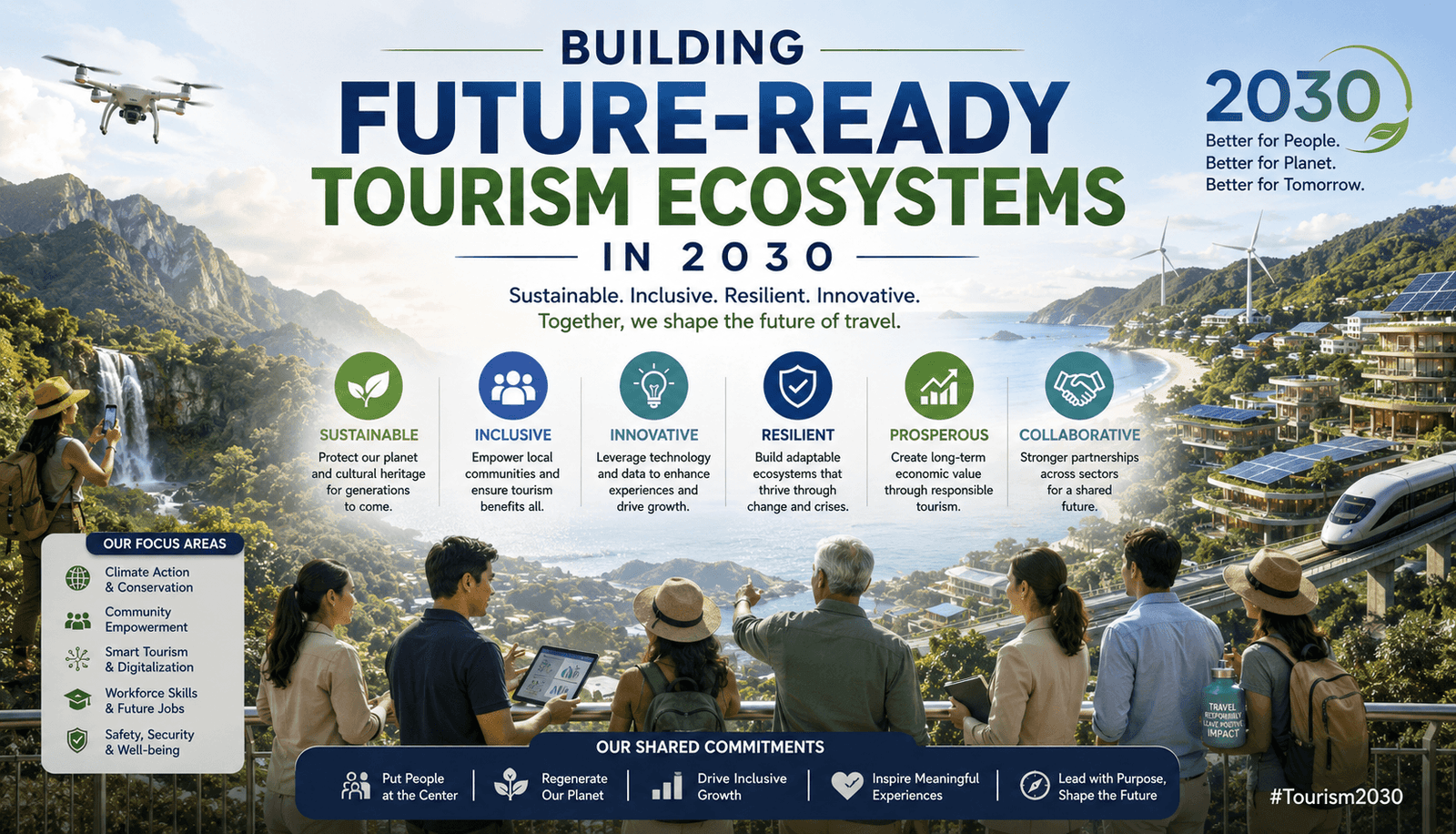
What will define tourism in 2030?
🌱 Sustainable Destinations
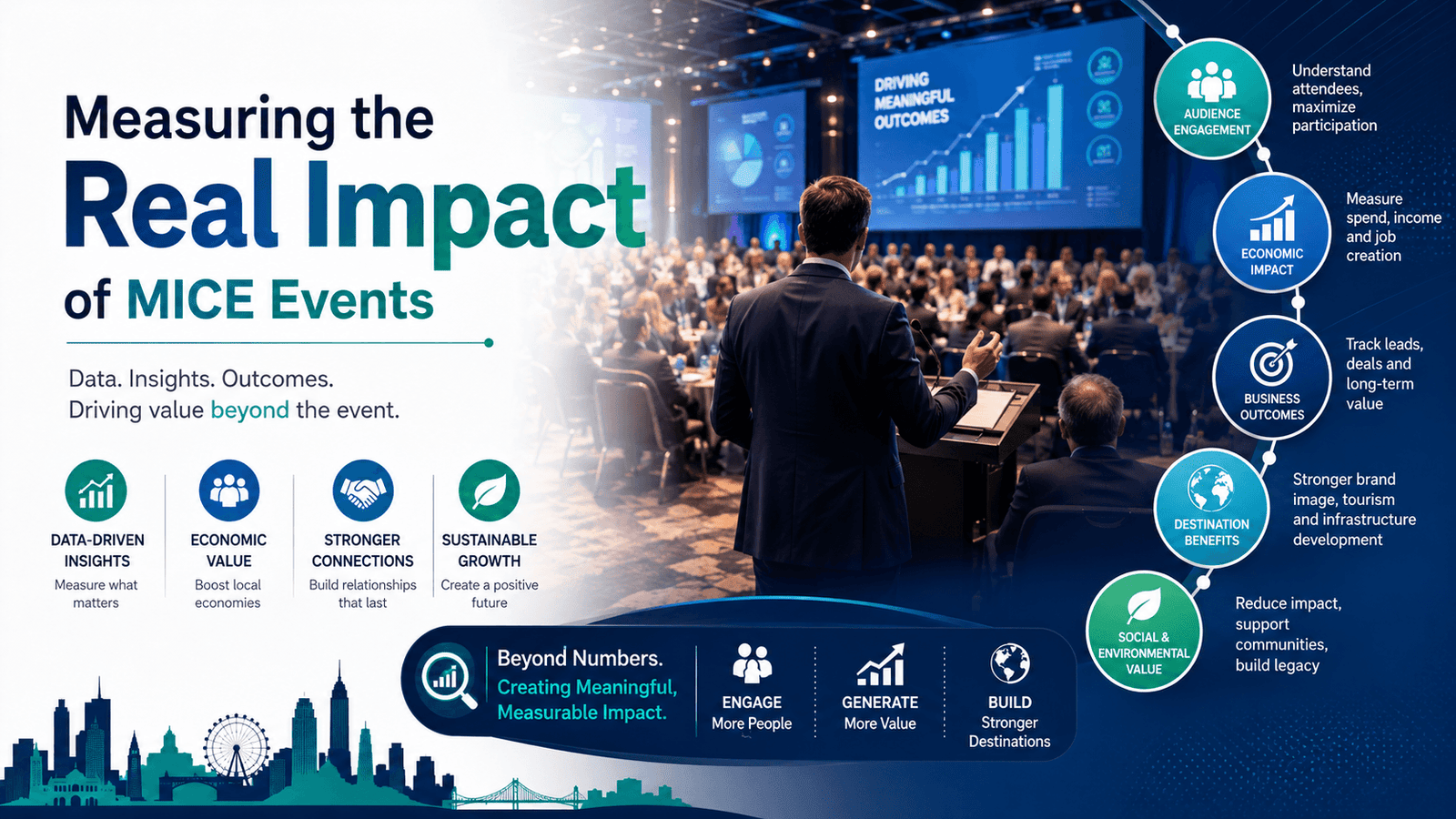
Destinations will increasingly measure environmental, economic, and social impact—not just visitor numbers. Climate resilience, biodiversity, resource efficiency, and responsible visitor management will become essential.
💡 Technology & Innovation
AI, data analytics, smart destination platforms, AR/VR, and digital visitor journeys will help destinations understand visitors better and make more informed decisions.
👥 Future-Ready Human Capital
With tourism supporting one in nine jobs globally, skills will become a critical competitive advantage. Education, industry exposure, reskilling, and lifelong learning will need to evolve alongside the industry.
🏘️ Communities at the Centre
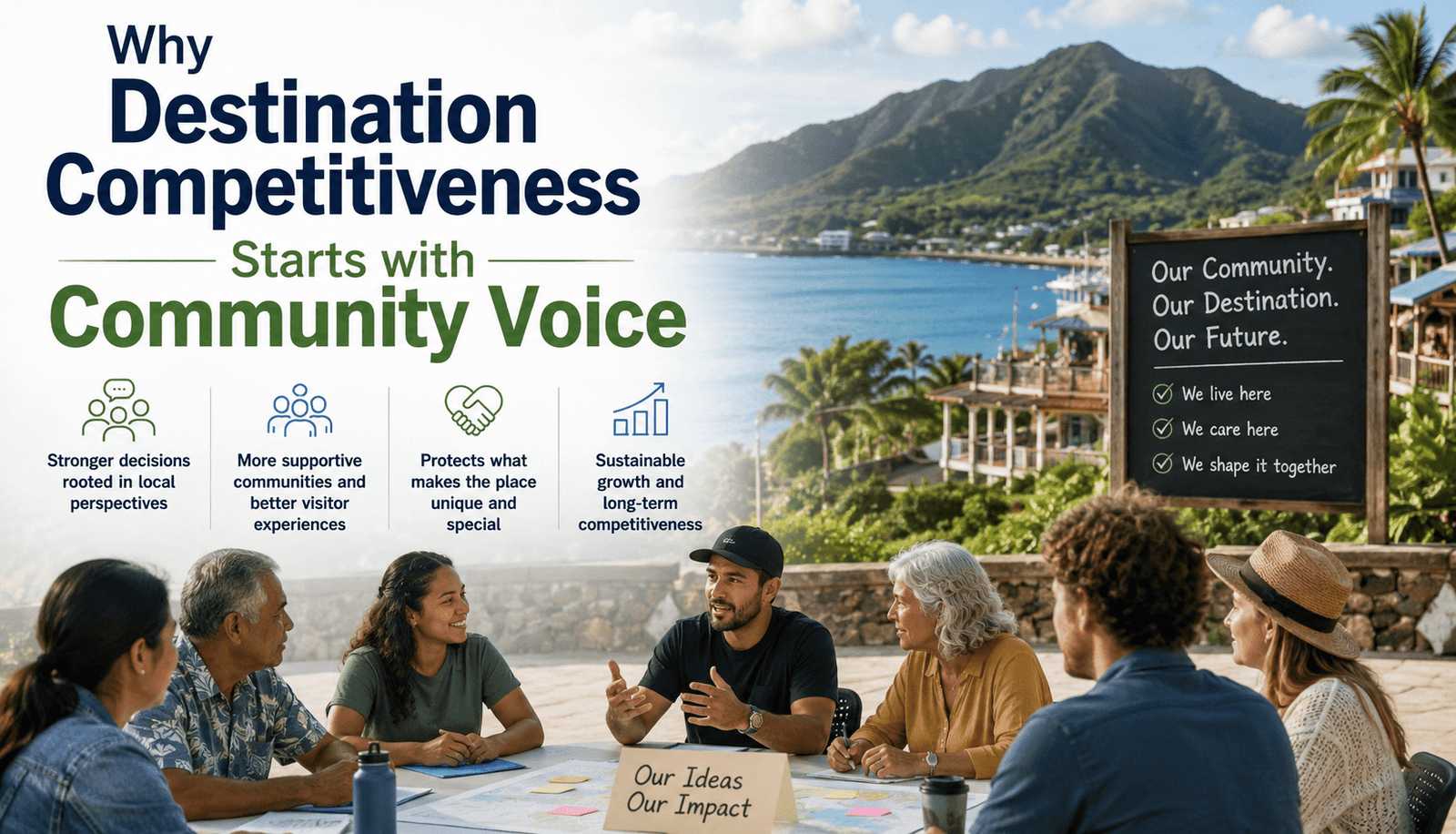
Rural, coastal, agricultural, tribal, and emerging destinations can use tourism to create local entrepreneurship, employment, and cultural opportunities—ensuring that tourism value reaches beyond established tourism centres.
🌍 Global Knowledge, Local Action
International partnerships can help destinations access knowledge, standards, technology, investment, and new markets while retaining their unique cultural and community identity.
A New Tourism Economy
The direction is already visible. Saudi Arabia's Vision 2030, for example, places tourism at the centre of economic diversification, while countries such as Germany and Australia are combining tourism growth with investment in connectivity, visitor experience, innovation, and competitiveness.
For India, the opportunity is even broader: to connect destinations, communities, universities, businesses, governments, and global partners into an ecosystem where tourism creates economic value while protecting culture, people, and natural resources.
By 2030, the most successful destinations may not simply be those attracting the most visitors—but those that can demonstrate better experiences, stronger communities, skilled people, responsible businesses, measurable impact, and greater resilience.
At DTORR, we believe the future of tourism is not something we wait for.
We Explore. We Innovate. We Share.
And we build the future of tourism, together.